Are High-Performance Windows Worth It in 2026?
Learn how Low-E glass, multiple panes, gas fills, spacers, frames, and installation affect window performance—and when replacement is worth considering.

Shopping for windows can turn into a vocabulary lesson very quickly.
Double-pane. Triple-pane. Low-E. Argon. Krypton. Warm-edge spacer. U-factor. Solar heat gain coefficient.
All of those features can affect performance, but they do not automatically make an expensive window the right investment for every building.
The more useful question is not whether high-performance windows are “good.” Modern window technology can provide much better insulation and comfort than basic single-pane glazing. The real question is whether replacing your current windows is the best way to solve the problem you actually have.
Quick takeaway: High-performance windows make the most sense when existing windows are failing, uncomfortable, damaged, or already part of a major renovation. If the main issue is a small air leak, worn weatherstripping, excess sun, or one failed glass unit, less expensive improvements may deserve a look first.
Start With the Glass Package
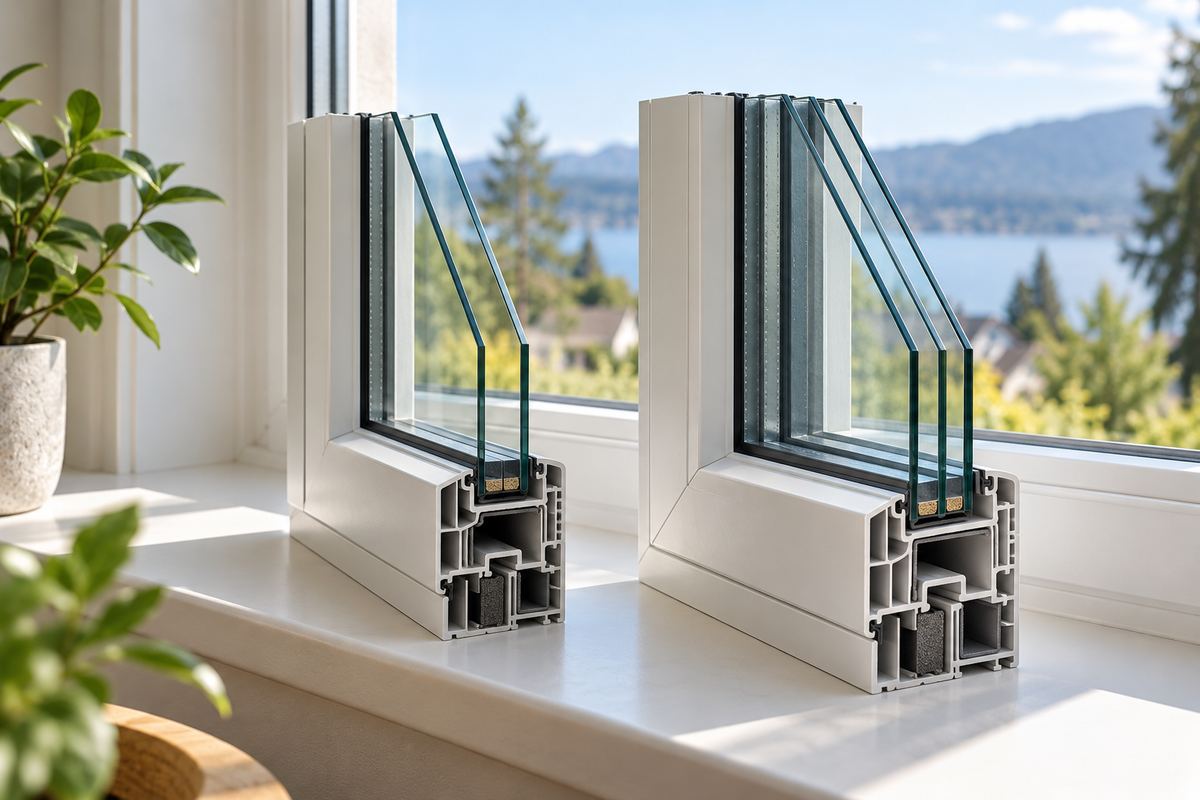
Modern insulated windows typically use two or three panes separated by sealed spaces.
Adding panes can reduce heat transfer, but pane count is only one part of the design. Performance also depends on coatings, gas fill, spacers, frames, seals, and the overall configuration.
That is why one double-pane window can outperform another double-pane model by a meaningful amount. It is also why “triple-pane” should not be treated as a complete specification.
What Low-E Coatings Actually Do
Low-E means low emissivity.
A Low-E coating is a very thin layer applied to glass to control radiant heat transfer. Depending on the coating, it can help keep interior heat from escaping in cold weather or reduce unwanted solar heat entering during warmer conditions.
Different Low-E products are tuned differently, so the best glass for a cold northern climate may not be the same as the best glass for a hot, sunny one.
The key is to shop for climate-appropriate performance rather than simply asking whether a window has Low-E glass.
Why Argon and Krypton Are Put Between the Panes
The space inside an insulated glass unit can be filled with gas that conducts heat less readily than ordinary air.
Argon is common because it offers useful thermal performance at a relatively reasonable cost.
Krypton provides stronger insulating performance in certain narrow glass spaces but costs more, which is one reason it is more likely to appear in premium or specialized glazing systems.
Neither gas makes a poor window automatically excellent. A well-designed window combines the gas fill with the right pane spacing, coatings, frame, spacers, and seals.
The Spacer Around the Glass Matters Too
Look at the edge of an insulated glass unit and you will find the spacer system that separates the panes.
Older highly conductive spacer designs can create a colder zone around the perimeter of the glass.
Modern warm-edge spacer systems are designed to reduce that edge heat transfer. They can improve the window’s overall thermal performance and may help reduce the likelihood of condensation developing around the glass edge.
This is not as easy to advertise as “triple-pane,” but it is an example of why the complete window design matters.
Do Not Forget the Frame
Excellent glass installed in a highly conductive or poorly sealed frame can limit the benefit.
Wood, vinyl, fiberglass, composite materials, and thermally improved metal frames all behave differently.
Installation is just as important. Gaps around a new frame can allow air leakage and leave a room uncomfortable despite expensive glass.
When comparing products, look at the rated performance of the complete window rather than focusing on the center of the glass alone.
Two Numbers Are More Useful Than Most Sales Language
When comparing products, start with U-factor and solar heat gain coefficient, or SHGC.
U-Factor
U-factor measures how readily heat passes through the complete window. Lower numbers generally mean better resistance to heat flow.
For cold climates, a lower U-factor can be particularly useful because it reduces heat loss through the window.
Solar Heat Gain Coefficient
SHGC describes how much solar heat passes through the product.
Lower SHGC values reduce solar heat gain, which can be useful in hot climates or for windows exposed to intense sun. Higher solar gain may be desirable in certain cold-climate applications where winter sun is beneficial.
The best rating depends on climate and orientation rather than one universal number.
When High-Performance Replacement Windows Make Sense
A full replacement becomes easier to justify when several problems are happening at once.
- Frames are rotted, badly damaged, or distorted
- Insulated glass seals have failed throughout the building
- Windows are difficult or unsafe to operate
- There is significant air leakage that cannot be corrected reasonably
- Existing single-pane windows provide poor comfort
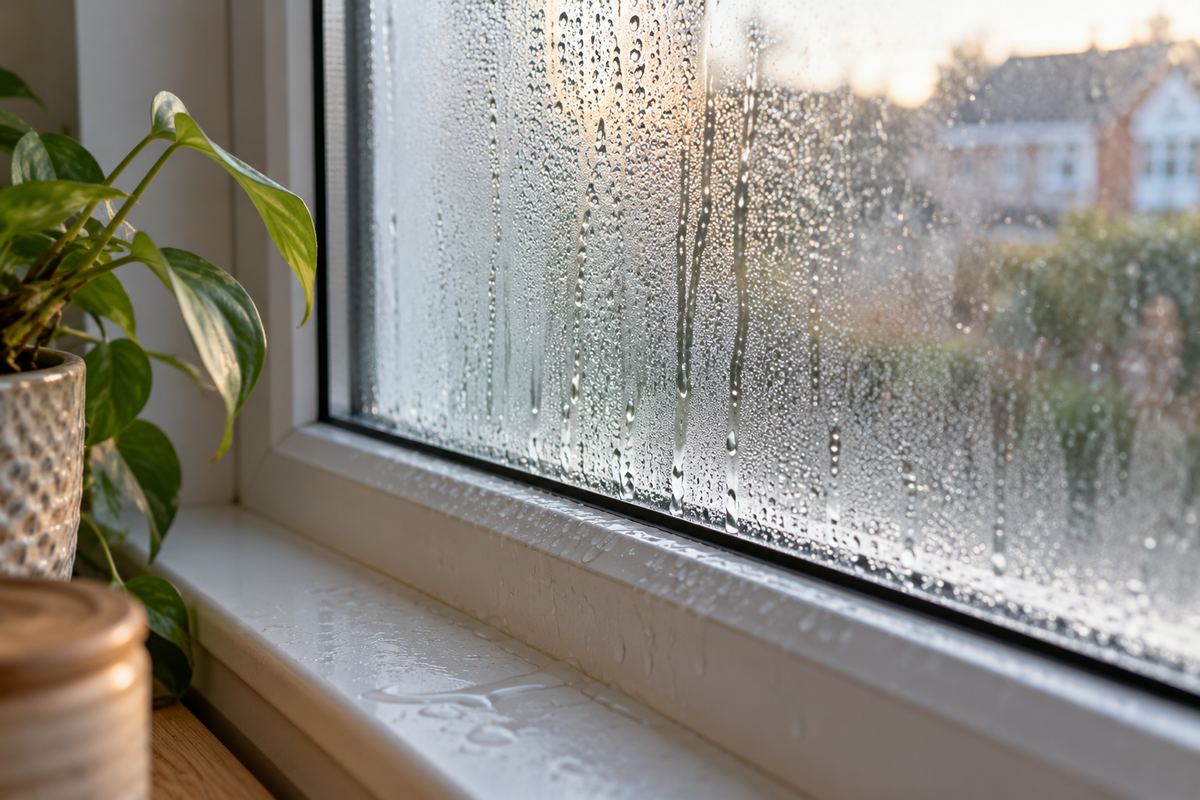
- Condensation problems are related to very cold interior glass surfaces
- Noise reduction is an important goal
- Siding or a major renovation already requires removing the windows
- You expect to remain in the property long enough to benefit from the improvement
Energy savings can be part of the value, but they do not need to carry the entire decision. Comfort, maintenance, sound control, appearance, operation, and durability may be equally important.
When Replacement May Be More Than You Need
Suppose the windows open normally, the frames are solid, and the glass is intact—but cold air is entering around the sash.
Start by checking the weatherstripping.
If air is entering between the window frame and the surrounding wall, sealing that gap may be the real solution.
Other problems can have targeted solutions too. A failed insulated glass unit may sometimes be replaceable without removing the entire window. Exterior shading can reduce solar heat before it reaches the glass. Interior shades or window treatments can improve comfort. Certain storm-window systems can improve an older window while preserving the original unit.
The best option depends on whether the actual problem is air leakage, conductive heat loss, solar heat, damaged glass, frame failure, noise, or appearance.
Double-Pane or Triple-Pane?
Triple-pane windows can achieve lower U-factors and warmer interior glass temperatures than comparable double-pane products, making them particularly attractive in colder climates or high-performance buildings.
But triple-pane units add cost and weight.
In many moderate climates, a strong double-pane window with good Low-E coatings, an appropriate gas fill, quality frames, and careful installation may provide a sensible balance.
Rather than choosing by pane count alone, compare the rated performance of the specific products.
Run the Numbers Around the Actual Problem
If you are replacing windows only to reduce the utility bill, be cautious with simple payback promises.
Savings vary with climate, existing window condition, building insulation, energy prices, shading, HVAC efficiency, and installation.
A better comparison starts with one question: What bothers me now?
Then ask which option fixes that problem with the least unnecessary work.
If the answer is a small weatherstripping repair, a full replacement does not become better simply because it has excellent specifications. If the existing windows are failing throughout the property, the calculation changes completely.
The Bottom Line
High-performance windows are real building technology, not just a marketing phrase.
Multiple panes, Low-E coatings, insulating gas fills, warm-edge spacers, improved frames, and careful installation can work together to create a noticeably better-performing window.
But a high-performance product is only valuable when it solves a problem worth paying to solve.
Diagnose the existing window first. Repair small air leaks and maintenance problems when practical. When replacement is justified, compare whole-window performance and climate-appropriate ratings rather than choosing the product with the longest feature list.
Source: U.S. Department of Energy — Window Types and Technologies.
Related Articles
-

When Should You Consider Replacing Your Windows?
Signs that can help homeowners decide whether window repair, maintenance, or replacement deserves a closer look.
-
Double-Pane vs. Triple-Pane Windows: What Changes?
A clear comparison of double-pane and triple-pane windows for comfort, noise, cost, and project planning.
-
Why Do Windows Get Condensation?
Understand the difference between indoor surface condensation, exterior condensation, and moisture trapped between panes.
Get Smarter About Your Home
Free home improvement tips, useful updates, cost guides and savings ideas.