
Smaller Hail Can Weaken a Roof Over Time: What 2026 Research Is Showing
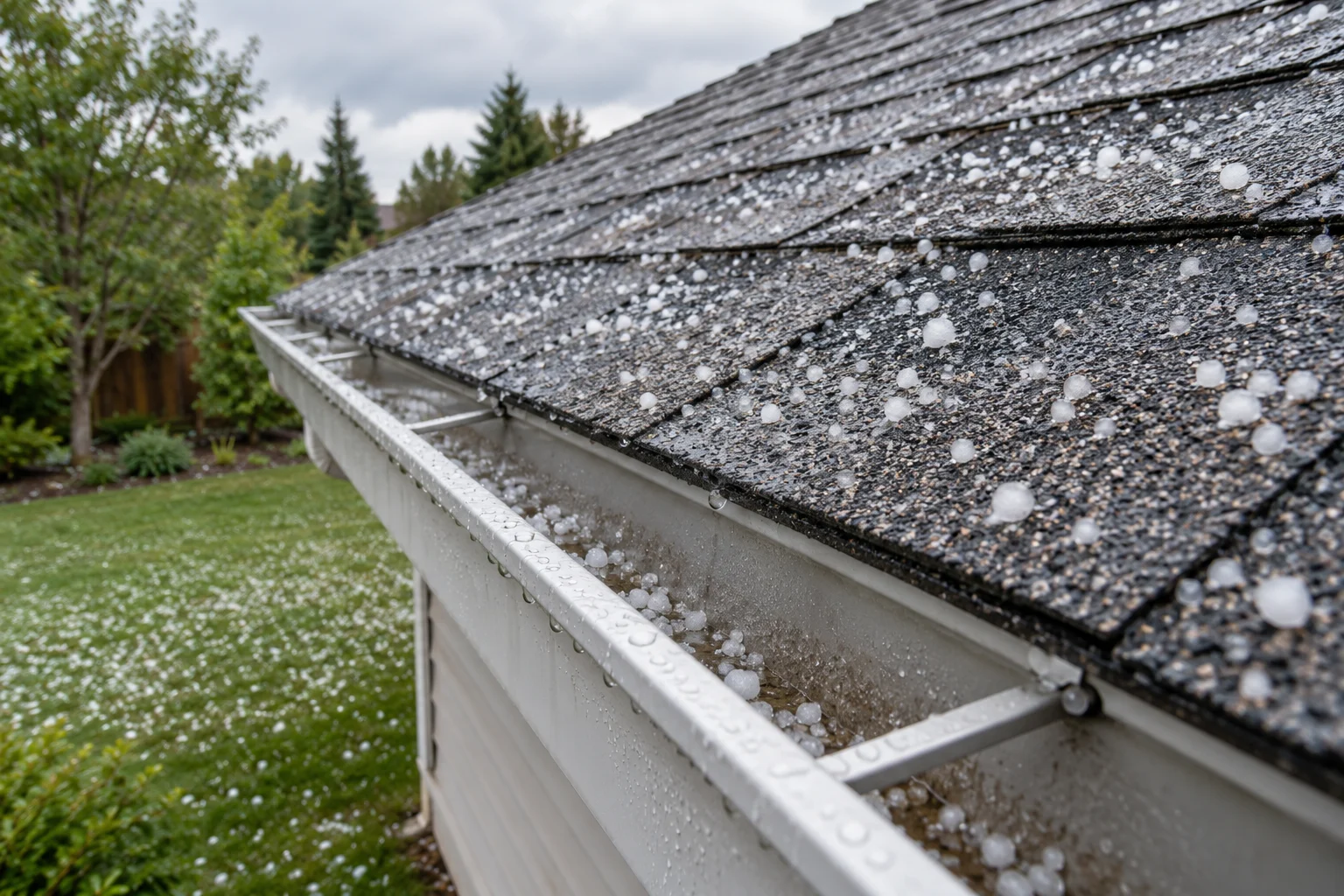
Roof damage is not always caused by one giant hailstone. IBHS research is examining how repeated smaller hail can reduce the future impact resistance of asphalt shingles.
Last updated: October 5, 2026.
After a hailstorm, people naturally look for the biggest stones. Newer roofing research suggests that is only part of the story. Repeated exposure to smaller hail can matter too, especially when an asphalt-shingle roof experiences storms over several years.
Why “Small” Hail Still Matters
Hail damage is usually discussed in terms of diameter: bigger stones carry more energy and are more likely to create immediate visible damage. But roofs are exposed systems. They can experience multiple storms, heat, ultraviolet light, wind, and aging between those events.
IBHS reported that a peer-reviewed study found repeated moderate-to-high concentrations of smaller hail significantly reduced shingles’ resistance to later impacts. The organization has been expanding that work across additional shingle products and real-world conditions.
Damage Can Be Cumulative
Think of roof durability as a history, not a single event. A shingle that has already experienced years of weather and repeated impacts may not respond to the next storm the same way a new shingle would.
That does not mean every small hailstorm requires a roof replacement. It means “the stones were not huge” is not enough information to conclude that nothing changed.
What IBHS Did in the Field in 2026
IBHS says its 2026 hail field team spent roughly two and a half weeks in the field, traveled nearly 8,000 miles, and completed 10 intensive observation periods. The goal of the field program is to collect physical hail data that can improve laboratory tests, radar interpretation, and understanding of regional hail characteristics.
Real hail is complicated. Stone size, hardness, shape, concentration, wind, and roof condition all affect the outcome. Better field measurements help researchers build tests that resemble real storms more closely.
What Homeowners Should Check After Hail
Do not climb onto a roof just to inspect it. From the ground or a safe window, look for changes such as:
- Missing, lifted, or displaced shingles
- Damaged gutters or downspouts
- Fresh dents on metal vents, flashing, or trim
- Shingle material or granules collecting near downspouts
- New stains or moisture signs inside the attic or ceiling
Photos taken before and after storm season can make subtle changes easier to spot.
Impact-Resistant Does Not Mean Impact-Proof
Impact-resistant shingles can be a useful option in hail-prone areas, but no roof is immune to every storm. IBHS publishes comparative ratings for impact-resistant shingles because performance can vary between products.
If you are replacing a roof, ask what test standard or independent rating supports an “impact-resistant” claim rather than relying on the phrase alone.
When an Inspection Is Worth Considering
A professional inspection can make sense after a severe storm, when neighbors experienced documented damage, when the roof is older, or when you see a new leak or visible exterior change. Ask the inspector to show specific findings with photos instead of using hail as a generic reason to recommend replacement.
If an insurance claim may be involved, document the date of the storm and the condition of the property before repairs begin, while taking reasonable steps to prevent further damage.
Related reading: How asphalt-shingle wind resistance changes with age · A practical roof-maintenance checklist · Roof repair or replacement?
The Bottom Line
Hail risk is not only about the largest stone in one storm. IBHS research is building a stronger case that repeated smaller impacts can affect how asphalt shingles perform later. Treat roof condition as cumulative: age, prior storms, product type, installation, and current visible changes all matter.
Sources: IBHS — 2025 Year in Review, Hail Research; IBHS — 2026 Hail Field Research.
Get Free Daily Tips and Updates
Practical tips, money-saving ideas, useful guides, selected deals and helpful updates.