How Asphalt Shingle Wind Resistance Changes With Age
New IBHS research shows that asphalt shingle wind resistance can change over time. Here is what roof age, sealant bonds, climate, and visible damage can tell you.
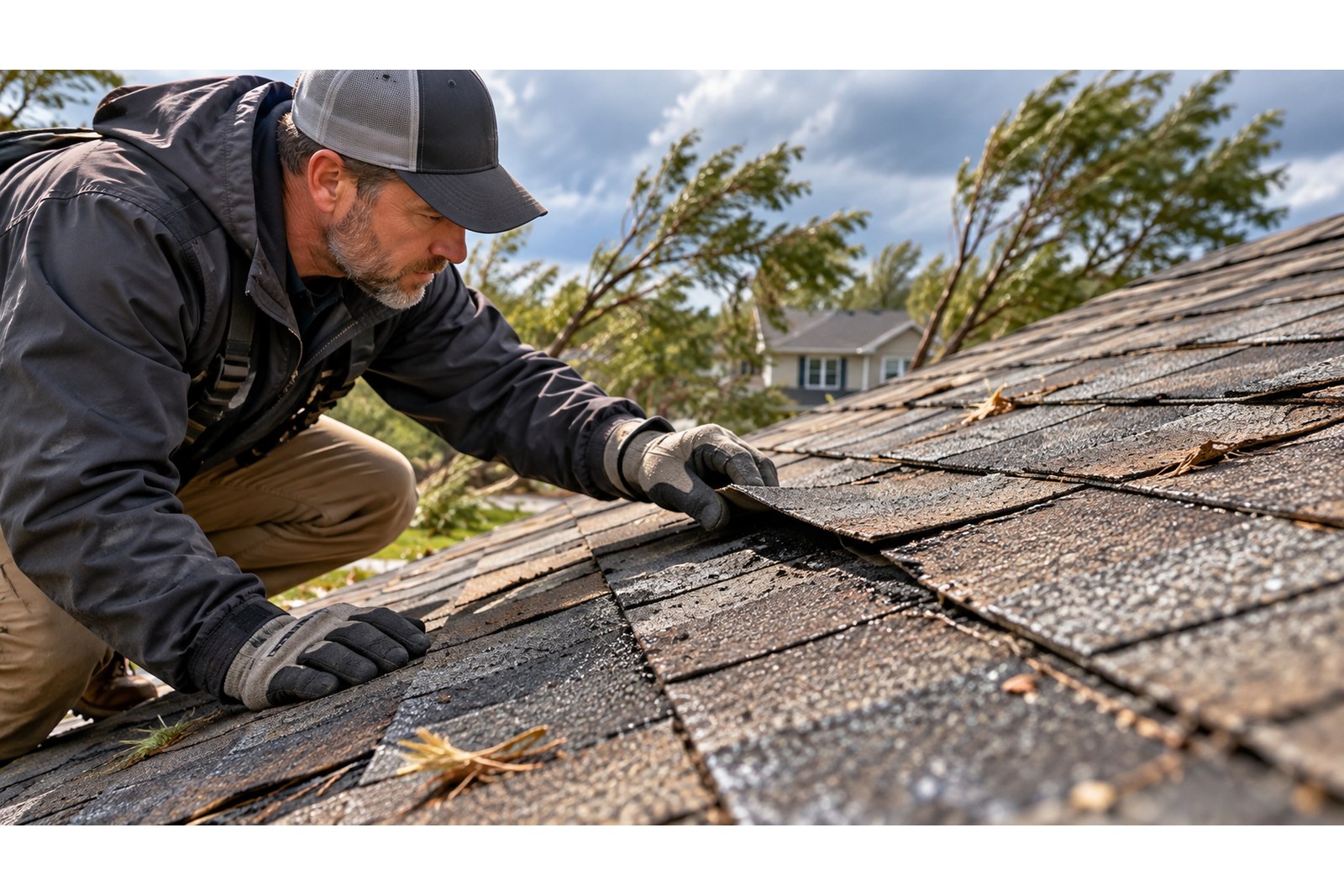
A new asphalt-shingle roof may come with an impressive wind rating, but that rating describes a product near the beginning of its life. Years of sun, temperature changes, rain, storms, and normal weathering can change how the roof behaves when strong wind arrives.
Research released by the Insurance Institute for Business & Home Safety (IBHS) in September 2026 provides a useful look at what happens over a much longer period. Researchers compared shingles at their original laboratory baseline with products that had aged naturally for five and 10 years in different climates. The results show that age matters—but not in one simple, predictable way.
Quick takeaway: An older asphalt-shingle roof is not automatically weak, and a younger one is not automatically protected. IBHS found meaningful differences between products, climates, roof orientations, and especially the condition of the adhesive seal that helps shingles stay flat.
Wind Performance Does Not Decline in a Straight Line
It is tempting to think of roofing performance as a steady downward slope: new shingles start strong, then slowly become weaker every year.
The IBHS findings were more complicated. Many products in the study actually developed greater wind resistance during their first several years outdoors. One reason is that the sealant strips beneath the shingles can activate and form strong bonds after installation.
Later, however, most of the tested products began losing some wind resistance between years five and 10. The amount of decline was not uniform. Some products continued to perform well after a decade, while others changed more noticeably.
That difference matters because two roofs can be the same age and carry similar original wind classifications yet respond differently after years of real-world exposure.
The Seal Between Shingles Is a Critical Detail
Asphalt shingles are not held in place by nails alone. Most modern shingles also use a factory-applied sealant strip. Heat and pressure help adjacent shingles bond together after installation, allowing the roof covering to behave more like a connected surface instead of individual tabs that wind can easily lift.
IBHS identified shingle unsealing as the strongest driver of wind vulnerability in its research. Products that were more likely to lose that bond were also more likely to experience wind-related failure.
That does not mean someone should walk across a roof and pull on shingles to test them. Doing so can damage roofing materials and creates an obvious fall risk. The practical lesson is simpler: sections that begin looking lifted, uneven, or disturbed deserve attention.
Climate and Roof Orientation Affect Aging
Ten years outdoors in one part of the country is not identical to ten years somewhere else. IBHS examined products exposed in different climate regions and found that environmental conditions influenced long-term performance.
Solar exposure, temperature cycles, location, and roof orientation all played a role in how products aged. A south- or west-facing roof surface, for example, may experience different levels of sunlight and heat than another slope on the same building.
The number of birthdays a roof has had is therefore only one piece of information. Product selection, installation, local climate, maintenance history, and exposure conditions all matter.
A High Wind Classification Is Not a Lifetime Guarantee
The tested products originally carried high wind classifications under current standards, yet their long-term performance was not identical.
That does not make product ratings meaningless. Ratings are still useful for comparing shingles that meet specific test standards. What they cannot do is guarantee that every product with the same label will weather in exactly the same way for 10, 15, or 20 years.
Real roofs experience heat, UV exposure, rain, debris, repairs, installation differences, and repeated storms that a single laboratory rating cannot fully summarize.
What Can You Look for From the Ground?
You do not need to become a roofing inspector to notice useful changes. After strong wind or severe weather, step back far enough to view the roof safely and look for areas that appear different from the surrounding surface.
- Shingle edges that appear raised or curled
- Missing or displaced shingles
- A section that suddenly looks uneven
- Loose-looking ridge or edge materials
- Flashing that appears bent or displaced
- Debris from branches or other storm damage
- New water stains inside the building after a storm
Photos can be surprisingly useful. Taking a few dated pictures from the same safe location every year—and after major storms—creates a simple visual record of changes.
For renters, visible roof damage should generally be reported to the landlord or property manager rather than investigated on the roof.
Roof Age Still Matters, Just Not by Itself
Age remains useful information. A roof that has spent many years exposed to weather deserves more attention than it did immediately after installation.
What the IBHS work adds is context. There is no single birthday when every asphalt shingle suddenly loses adequate wind resistance. Different products can follow different performance paths depending on the material and the environment.
That is why a roof should not necessarily be replaced simply because it reaches a certain age. Condition, recurring damage, leaks, installation quality, repair history, and expected future exposure all belong in the decision.
Keep the Product Information When You Replace a Roof
A surprisingly useful step during a new roof installation is saving the product details. Keep the manufacturer name, product line, color, installation date, contractor information, warranty paperwork, and invoices. If possible, save photographs of packaging labels.
Knowing exactly what was installed can help with warranty questions, future repairs, and product matching. It also provides better context if you ever need to evaluate how a particular roof has aged.
When an Inspection Is Worth Considering
A professional roof inspection becomes more useful after significant wind or hail, when visible changes appear, when leaks develop, or when an older roof has an uncertain maintenance history.
An inspection does not automatically mean replacement. A useful evaluation should identify what is damaged, where it is located, whether repair is practical, and whether the rest of the roof remains serviceable.
The Bottom Line
The biggest lesson from the latest IBHS research is not that asphalt shingles become unreliable after a specific number of years. It is that long-term wind resistance is more variable than a simple age or original rating suggests.
Some products maintain stronger performance than others. Weather exposure and roof orientation matter. Most importantly, the bond that keeps shingles sealed together can strongly influence what happens when high winds arrive.
Routine visual checks, good records, and attention after major storms give you much more useful information than roof age alone.
Source: Insurance Institute for Business & Home Safety — 10-Year Wind Performance of Asphalt Shingles.
Related Articles
-
Roof Repair or Replacement? How to Think Through the Decision
A practical way to compare roof repair and full replacement without jumping to the most expensive option.
-
A Practical Roof Maintenance Checklist for Homeowners
Simple roof and exterior checks that can help you spot small issues before they turn into larger repairs.
-
How Much Does a Metal Roof Cost in 2026? What Homeowners Should Know
A practical guide to metal roof costs in 2026, the factors that change your price, and what to…
Get Smarter About Your Home
Free home improvement tips, useful updates, cost guides and savings ideas.