
New-Car Safety Changed in 2026: What Seat-Belt Alerts and Pedestrian Tests Mean for Buyers
Two important vehicle-safety changes arrived in 2026. Here is what new seat-belt reminder requirements and pedestrian-protection testing mean when comparing a new car.
Last updated: October 5, 2026.
Buying a new car in 2026 is not only about horsepower, screens, fuel economy, or driver-assistance features. Two less flashy safety changes are worth knowing because they affect how new vehicles are tested and what buyers may notice every day.
Seat-Belt Reminders Got More Demanding
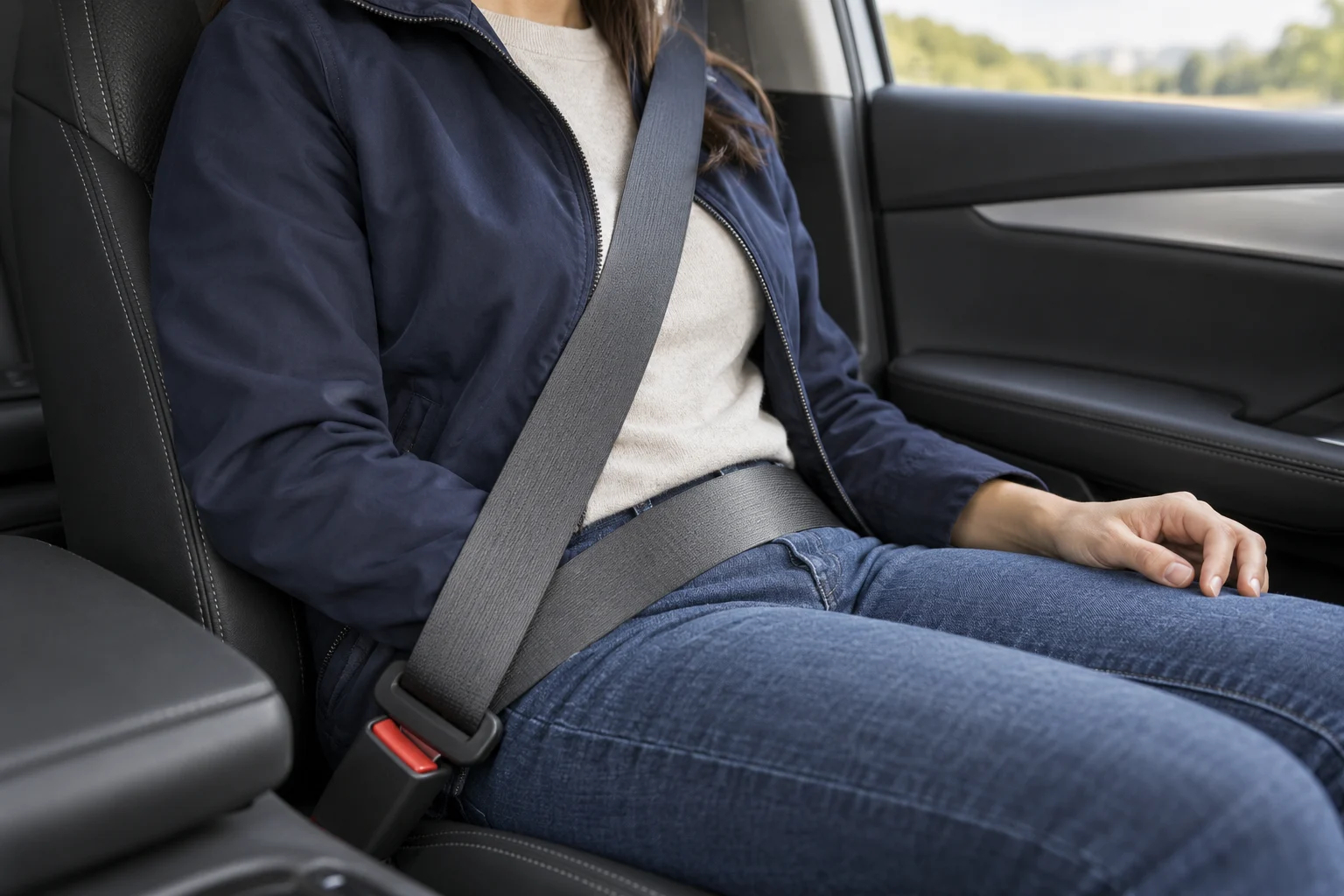
Federal seat-belt reminder rules have been expanded. NHTSA says manufacturers must meet enhanced front-seat warning requirements on new vehicles beginning September 1, 2026. Rear-seat reminder requirements follow on September 1, 2027.
For drivers, this may mean more persistent visual or audible reminders when a front occupant is not buckled. That can feel like a small change, but reminder systems matter because a safety feature only helps when people actually use it.
Pedestrian Protection Is Now More Visible
In September 2026, NHTSA released its first pedestrian-protection assessment results for model-year 2027 vehicles. The new evaluation looks at how vehicle design may affect injury risk to a pedestrian’s head, hips, legs, and knees in a collision.
The agency says a vehicle’s ratings page can show whether it passed, failed, is pending, or did not submit results for the pedestrian-protection criteria. That gives shoppers another piece of information beyond the familiar star rating.
Do Not Read One Safety Result in Isolation
A car can perform well in one area and be average in another. A sensible comparison should include several layers:
- Crashworthiness: how occupants are protected in a crash.
- Crash avoidance: features such as automatic emergency braking and other driver-assistance systems.
- Seat-belt and occupant reminders: systems that encourage safer behavior.
- Pedestrian protection: how the vehicle’s front-end design performs in the newer assessment.
- Recalls: whether the specific make, model, and model year has open safety recalls.
A Better Way to Compare Two Cars
If you are choosing between two vehicles, start with the NHTSA pages for both exact model years. Do not assume the newest version has the same result as the previous year. Equipment, body structure, sensors, and test results can change.
Then make a short list of the features that matter for your household. Families may care about rear-seat usability and child-seat setup. Highway commuters may value strong crash-avoidance performance. City drivers may place more weight on pedestrian and cyclist detection.
Finally, test the safety features during the drive. Check whether alerts are clear without being confusing, whether driver-assistance settings are easy to understand, and whether visibility is good in real traffic.
What This Means for 2026 Buyers
The useful change is not that every new car suddenly became safer on one date. It is that consumers are getting more information about safety behaviors and risks that older rating systems did not show as clearly.
When two cars are close in price, these newer safety details can help break the tie. They are especially useful when combined with crash-test results, recall history, insurance costs, and a real test drive.
Related reading: What to compare before switching auto insurance · How vehicle service contracts work · How to compare prices more carefully in 2026
The Bottom Line
A 5-star badge is still useful, but it should not be the only safety question you ask. In 2026, shoppers can also look at enhanced belt-reminder requirements and the first round of NHTSA pedestrian-protection assessments. The best choice is the model that performs well across the safety areas that match how you actually drive.
Sources: NHTSA — Seat Belt Reminder Rule; NHTSA — First Pedestrian Safety Test Results.
Get Free Daily Tips and Updates
Practical tips, money-saving ideas, useful guides, selected deals and helpful updates.